
 Create Shivah
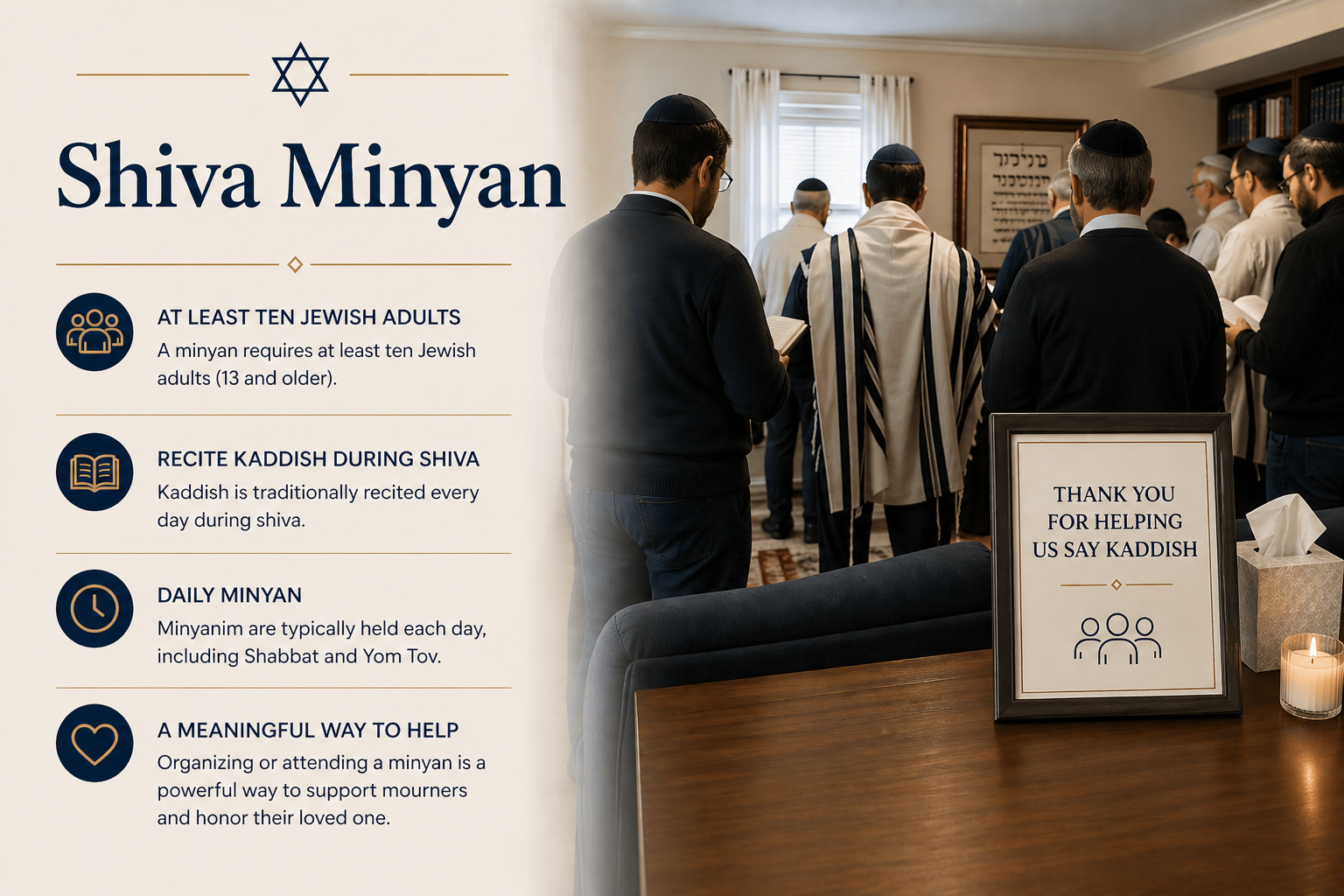
Shiva Minyan: What It Is, How It Works, and How to Organize One
For families sitting shiva, one of the most important — and sometimes most logistically challenging — aspects of the mourning period is the shiva minyan. Many mourners want to recite Kaddish every day during shiva, and doing so requires gathering at least ten Jewish adults for a formal prayer service.
If you are a mourner trying to organize a minyan, or a community member trying to help, this guide explains everything you need to know.
What Is a Minyan?
A minyan (מִנְיָן) is a quorum of ten Jewish adults required for certain religious obligations in Jewish law. The word comes from the Hebrew root meaning "to count" or "number."
A minyan is required for: - Reciting the Mourner's Kaddish - Certain communal prayers, including the Barechu, Kedushah, and Torah reading - Formal prayer services in general
Without a minyan, mourners can still pray privately — but they cannot recite Kaddish, which is one of the most meaningful rituals of the shiva period for many families.
What Is a Shiva Minyan?
A shiva minyan is a prayer service held at the shiva house — in the home of the mourning family — so that mourners can recite Kaddish without leaving their home during the mourning period.
Traditionally, mourners sit shiva at home and do not go out. Bringing the minyan to them allows them to fulfill this important religious obligation while remaining in the comfort and sanctity of the shiva house.
A shiva minyan typically includes: - Shacharit (morning prayers) - Mincha (afternoon prayers) - Ma'ariv (evening prayers)
Some families hold all three services daily; others hold only one or two depending on their tradition and the availability of community members.
How Many People Are Needed for a Shiva Minyan?
A minyan requires ten Jewish adults. In Orthodox tradition, this means ten Jewish men over the age of Bar Mitzvah (13). In Conservative, Reform, and many other communities, women count equally toward the minyan.
The mourners themselves count toward the ten — so if there are four mourners in the house, you need six additional people to complete the minyan.
Why Is the Shiva Minyan So Important?
For many Jewish families, reciting Kaddish during shiva is a deeply meaningful act of love and honor for the person who has passed. The Mourner's Kaddish does not mention death at all — it is a prayer of praise to God, recited in the presence of community, that affirms life and faith even in the midst of grief.
Reciting Kaddish during shiva: - Honors the memory of the deceased - Connects mourners to the broader Jewish community and tradition - Provides a structured, spiritual anchor during an emotionally turbulent time - Is considered a great mitzvah (good deed) for the soul of the departed
For many mourners, the minyan is not simply a religious requirement — it is one of the most comforting parts of each day during shiva.
How to Organize a Shiva Minyan
Organizing a minyan for shiva can feel overwhelming when you are already managing the logistics of grief. Here is a step-by-step approach:
Step 1: Contact Your Rabbi or Synagogue
Your first call should be to your rabbi or synagogue. Most synagogues have established systems for helping families organize shiva minyans, and your rabbi can:
- Help recruit community members to attend
- Guide you on prayer times and formats based on your tradition
- Arrange for a prayer leader (chazzan or shaliach tzibur) if needed
- Connect you with the synagogue's chevra kadisha (burial society) for additional support
Step 2: Set the Prayer Times
Decide which services you want to hold and at what times. Common schedules include:
- Morning (Shacharit): 7:00–8:30 AM depending on community custom
- Afternoon/Evening combined (Mincha-Ma'ariv): Late afternoon, around sunset
Communicate the times clearly to everyone who plans to attend. Consistency helps — if people know the minyan is at 7:30 AM each morning, they can plan accordingly.
Step 3: Spread the Word
You need a minimum of ten people — but the more, the better. Ways to recruit minyan attendees:
- Ask your synagogue to announce the minyan and invite members to attend
- Contact friends and family directly — many people want to help but don't know how
- Post on community WhatsApp groups or email lists
- Use your shiva event page — if you've created one on SittingShivah.com, you can share the minyan schedule so visitors know exactly when to come
Step 4: Coordinate for All Seven Days
A shiva minyan needs to happen every day — which means you need committed attendees throughout the full shiva period, not just on the first day when turnout is naturally highest.
Consider: - Creating a simple sign-up schedule so different people commit to different days - Asking your synagogue to help ensure coverage on days when attendance may be lower - Identifying a reliable point person who can make reminder calls each morning
Step 5: Prepare the Space
Your home doesn't need to be transformed — but a few practical preparations help:
- Arrange seating for at least ten people in one area
- Have prayer books (siddurim) available — your synagogue may be able to lend them
- Ensure there is enough physical space for people to stand during certain prayers
- Keep the memorial candle burning in the room
- Inform visitors when the minyan will begin so they can plan their arrival accordingly
What Happens During a Shiva Minyan?
If you have never attended a shiva minyan before, here is what to expect:
Before the service: People arrive, greet the mourners quietly, and find seats. The atmosphere is subdued and respectful.
The service: A prayer leader guides the group through the service. Key moments include: - The Barechu (call to worship) - The Amidah (standing prayer) - The Kedushah (sanctification) - The Mourner's Kaddish — recited by the mourners aloud, with the congregation responding "Amen"
After the service: People may stay to visit with the mourners, share memories, and offer comfort. The minyan itself typically takes 20–45 minutes depending on the tradition.
What If You Can't Get a Minyan?
It happens — especially for families who are not connected to a synagogue or live in areas with smaller Jewish communities. Here are some options:
- Contact your local Jewish federation or community center — they often maintain lists of people willing to help complete a minyan
- Reach out to nearby synagogues — even if you are not a member, many congregations will help a mourning family
- Ask your rabbi — even in small communities, rabbis often know who to call
- Chabad — Chabad houses exist in many cities and are known for helping families with minyan needs regardless of affiliation
If a minyan simply cannot be arranged on a particular day, mourners can still pray privately. The Kaddish cannot be recited without a minyan, but private prayer and reflection remain meaningful and appropriate.
Shiva Minyan Etiquette for Attendees
If you are attending a shiva minyan as a community member, here is how to be a respectful and helpful presence:
- Arrive on time — the minyan cannot begin without ten people, and late arrivals delay the mourners
- Bring a siddur if you have one — it reduces the burden on the host family
- Follow the prayer leader — if you are unfamiliar with the service, simply follow along respectfully
- Stay for the full service — leaving in the middle disrupts the quorum and can be hurtful to the mourners
- Be quiet and respectful throughout — side conversations should wait until after the service
- Stay to visit after the service if you are able — your presence means a great deal to the family
Announcing the Minyan Schedule
One of the most practical things a family or community organizer can do is clearly communicate the shiva minyan schedule to everyone in the community. This includes:
- The address of the shiva house
- Prayer times for each day of shiva
- Whether morning, afternoon, and/or evening services will be held
- Any special instructions (parking, entrance, etc.)
A shiva event page on SittingShivah.com makes this easy — families can post all shiva details, including minyan times, in one place and share a single link with friends, family, and community members.
Frequently Asked Questions
What is a shiva minyan? A shiva minyan is a prayer service held at the shiva house so that mourners can recite the Mourner's Kaddish without leaving their home during the mourning period. It requires a quorum of ten Jewish adults.
How many people do you need for a shiva minyan? Ten Jewish adults — the mourners count toward the ten. In Orthodox tradition, all ten must be Jewish men over Bar Mitzvah age. In Conservative and Reform communities, women count equally.
What prayers are said at a shiva minyan? The full morning (Shacharit), afternoon (Mincha), and/or evening (Ma'ariv) services are held, with the Mourner's Kaddish recited by the mourners at the appropriate points in each service.
Can non-Jews attend a shiva minyan? Non-Jewish guests are welcome to be present at the shiva house during a minyan, though they do not count toward the quorum of ten. They should sit respectfully and quietly during the service.
What if we can't get a minyan for shiva? Contact your rabbi, local synagogue, Jewish federation, or Chabad for help. Many communities have systems in place to help mourning families assemble a minyan. If it is truly not possible on a given day, private prayer remains meaningful.
Do you need a rabbi to lead a shiva minyan? No — any knowledgeable Jewish adult can serve as the prayer leader. However, having a rabbi or experienced chazzan is helpful, especially for families less familiar with the prayers.
Conclusion
The shiva minyan is one of the most powerful expressions of Jewish community. It brings people together not just to pray, but to hold the mourner — to say, through presence and song and the words of Kaddish, that you are not alone in this grief.
If you are organizing a shiva, don't wait until the last minute to arrange the minyan. Reach out to your rabbi or synagogue early, communicate the schedule clearly, and let your community show up for you.
Planning your shiva and want an easy way to share the minyan schedule with friends and family? Create a free shiva event on Sitting Shivah — including minyan times, shiva house details, and everything the community needs to show up and support you.