
 Create Shivah
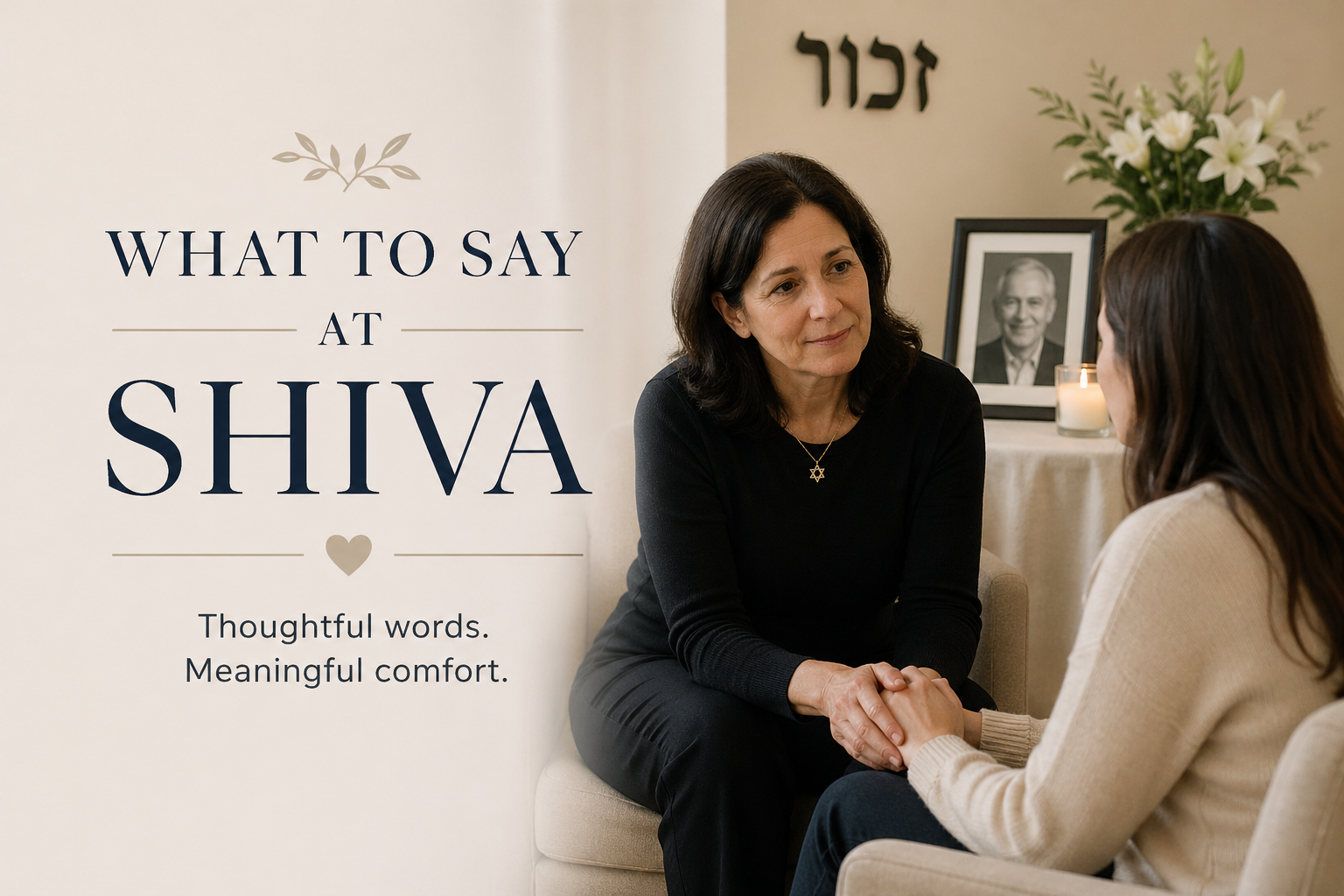
What to Say at a Shiva: Words of Comfort That Actually Help
Receiving the news that someone you know has lost a loved one is hard enough. Walking into a shiva house — not quite knowing what to say — can feel even harder. Most people are genuinely afraid of saying the wrong thing, and that fear can actually keep them from showing up at all.
The truth is, your presence matters far more than your words. But knowing what to say — and what to avoid — helps you show up with more confidence and give more meaningful comfort to the mourners.
This guide will walk you through exactly what to say at a shiva, what phrases to avoid, and how to simply be there in the most supportive way possible.
The Most Important Rule: Let the Mourner Lead
Before anything else, understand this: you do not initiate conversation at a shiva. Jewish tradition holds that visitors should wait for the mourner to speak first. This shows respect for the mourner's emotional state — they may not have the energy to talk, and that is completely okay.
When you arrive, simply sit nearby, make eye contact, give a gentle nod, and wait. Your quiet presence is itself a form of comfort.
What to Say at a Shiva
The Traditional Hebrew Phrase
The classic Jewish expression of condolence said at a shiva is:
"HaMakom yenachem etchem b'toch she'ar aveilei Tzion v'Yerushalayim"
In English, this translates to:
"May God comfort you among all the mourners of Zion and Jerusalem."
This phrase is traditionally said upon leaving a shiva house. It acknowledges grief while connecting the mourner to a larger community of loss — reminding them they are not alone.
If Hebrew feels unnatural to you, the English translation is equally meaningful and always appropriate.
Simple, Heartfelt Things to Say
You do not need to have the perfect words. Here are phrases that are always appropriate:
- "I am so sorry for your loss."
- "I'm here for you."
- "He/She was such a wonderful person."
- "I loved [name] so much. I will miss them."
- "I don't have the right words, but I want you to know I care."
- "Would you like to tell me about them?"
That last one is particularly powerful. Inviting a mourner to talk about their loved one — to share a memory or a story — is one of the greatest gifts a visitor can offer. It honors the person who passed and gives the mourner space to grieve openly.
Share a Specific Memory
One of the most comforting things you can do at a shiva is share a specific memory of the person who passed. Not a general compliment — a real, specific story.
For example: - "I'll never forget the time your mother made me feel so welcome at your Passover seder. She had a way of making everyone feel like family." - "Your father always remembered my kids' names, every single time. That meant so much to me." - "I still have the card she sent me when I was going through a hard time. I kept it for years."
Specific memories tell the mourner that their loved one truly mattered — that they left a mark on the world that others will carry with them.
Offer Practical Help — Specifically
A common but well-meaning mistake is saying "Let me know if you need anything." The problem is that grieving people rarely know what they need, and even if they do, they are unlikely to ask.
Instead, offer something specific:
- "I'd like to bring dinner on Thursday — does your family eat kosher?"
- "Can I pick the kids up from school this week?"
- "I'm going to the grocery store tomorrow morning. Can I get you anything?"
- "I'm going to drop off some food on Saturday. I'll leave it at the door if you need quiet."
Specific offers are easy to say yes to — and they make a real difference.
What NOT to Say at a Shiva
Knowing what to avoid is just as important as knowing what to say. These phrases are well-intentioned but can actually cause pain:
❌ "They're in a better place."
This assumes a religious belief the mourner may not share — and it can minimize their grief. Their loved one is gone. That loss is real, regardless of what comes after.
❌ "Everything happens for a reason."
Grief is not a puzzle to be solved. This phrase can feel dismissive and may make the mourner feel their pain is being explained away.
❌ "I know how you feel."
You don't — not exactly. Every loss is unique. This phrase, even with the best intentions, can feel invalidating.
❌ "At least they lived a long life" / "At least they didn't suffer."
"At least" statements minimize the loss. The mourner isn't looking for silver linings — they are looking for acknowledgment of their grief.
❌ "You need to stay strong for the kids/family."
Grief needs to be expressed, not suppressed. Telling someone to stay strong can make them feel they are not allowed to fall apart — which is exactly when they need to.
❌ Talking about yourself excessively
A shiva visit is for the mourner, not the visitor. Keep the focus on them and their loved one. If you have your own grief to process, find another time and place.
When Silence Is the Right Answer
Sometimes there are no words. And that is perfectly okay.
Sitting quietly beside a mourner — without filling the silence — is one of the most powerful forms of support. You do not need to talk. You do not need to entertain. Simply being present says: I am here. You are not alone.
A gentle touch on the hand or a warm hug (if the mourner initiates) can communicate more than any phrase.
What to Say When You Didn't Know the Deceased
If you are attending a shiva to support a friend but did not personally know the person who passed, it is completely fine to say:
- "I didn't have the chance to know your [mother/father/spouse], but I can see how much they meant to you."
- "I'm here for you. Tell me about them."
- "I'm so sorry. I know how much they meant to you."
You are there for your friend — and that alone is meaningful.
What to Say When You Leave
When you are ready to leave, this is the moment to offer the traditional Hebrew phrase if you choose to:
"HaMakom yenachem etchem b'toch she'ar aveilei Tzion v'Yerushalayim."
Or simply in English:
"May you be comforted among the mourners of Zion and Jerusalem."
If that feels too formal, a warm and simple goodbye works too:
- "I'm so glad I came. I'll be thinking of you."
- "Thank you for letting me be here. I'll check in on you next week."
Frequently Asked Questions
What is the traditional thing to say at a shiva? The traditional Jewish condolence phrase is "HaMakom yenachem etchem b'toch she'ar aveilei Tzion v'Yerushalayim" — meaning "May God comfort you among all the mourners of Zion and Jerusalem." In English, simply saying "I'm so sorry for your loss" is always appropriate.
Should I speak first when I arrive at a shiva? No — Jewish tradition holds that visitors should wait for the mourner to initiate conversation. Sit nearby, be present, and let the mourner lead.
What should you not say at a shiva? Avoid phrases like "they're in a better place," "everything happens for a reason," "at least they lived a long life," or "I know how you feel." These are well-meaning but can feel dismissive of the mourner's grief.
Is it okay to share a memory of the deceased at a shiva? Absolutely — sharing a specific, personal memory of the person who passed is one of the most meaningful things a visitor can do. It honors the deceased and comforts the mourner.
What if I don't know what to say at a shiva? It's okay to say exactly that: "I don't have the right words, but I'm here and I care." Silence and presence are powerful too. You don't need a script — you need to show up.
Conclusion
The most important thing you can bring to a shiva is yourself. Your presence — showing up, sitting quietly, listening, and sharing a memory — is worth more than any perfectly crafted phrase.
If you leave with one thing from this guide, let it be this: ask the mourner to tell you about their loved one. Those stories are a gift — to the mourner, to the memory of the person who passed, and to you.
Ready to help a grieving family coordinate their shiva gathering? Create a free shiva event on Sitting Shivah — so the family can focus on healing while we handle the logistics.